
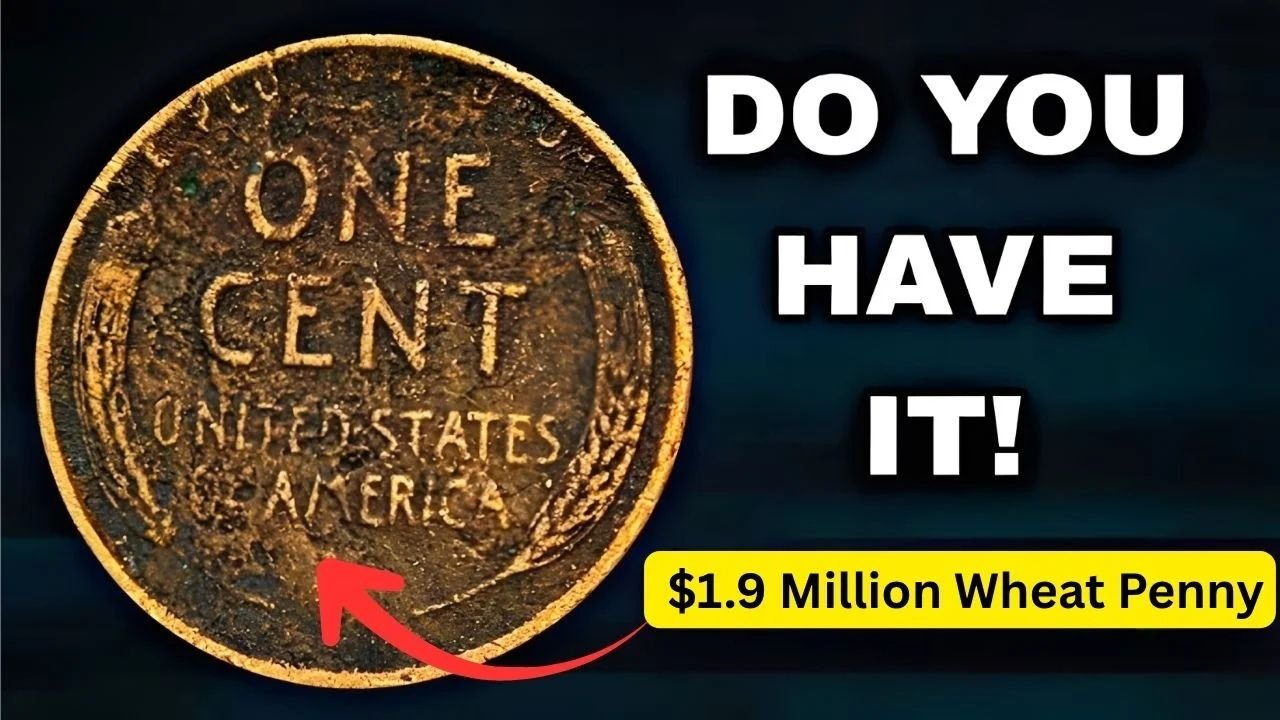
Imagine finding an old penny in a cookie jar, only to discover it’s worth nearly $1.9 million. Sounds unbelievable, right? But that’s exactly the story behind the legendary 1943 bronze Lincoln Wheat Penny—one of the rarest and most valuable coins in American history.
This tiny wartime error has turned everyday change into treasure, and in 2025, collectors across the country are searching harder than ever for the next million-dollar discovery.
A Penny Born From a Wartime Mistake

In 1943, during World War II, the U.S. Mint stopped making copper pennies so the metal could be used for military equipment. Instead, pennies were struck using zinc-coated steel, giving them a silver appearance.
But something unexpected happened.
A few leftover bronze planchets (blanks made from copper and tin) accidentally slipped into the presses. When the 1943 pennies were struck, a handful came out in bronze instead of steel.

Only around 20 genuine bronze 1943 pennies are known to exist today, divided among:
- Philadelphia Mint (no mint mark)
- Denver Mint (D)
- San Francisco Mint (S)
The rarest of them all—the 1943-D bronze penny—sold for $1.7 million in 2010. Experts now believe a new discovery in top condition could reach $1.9 million or more.
Why This Penny Is So Valuable
The 1943 bronze penny isn’t just rare—it represents a historic moment.
What Makes It Special
- Created by accident during a major wartime metal change
- Extremely low survival count
- Highly demanded by top collectors
- Only a handful exist, making each one a headline-maker

Historically, bronze was warm reddish-brown, while steel pennies were gray and magnetic. That’s the easiest way to spot whether you’ve found something extraordinary.
How to Tell if You Found a Real 1943 Bronze Wheat Penny
Most 1943 pennies are steel—and worth around 10 cents. But here’s how to identify the superstar version:
1. Magnet Test
- If it sticks: It’s steel (common).
- If it doesn’t: It could be bronze.
2. Weight Test
- Bronze: ~3.11 grams
- Steel: ~2.7 grams
A simple kitchen scale can reveal a lot.
3. Color
- Bronze: Reddish-brown
- Steel: Grayish-silver
4. Beware of Fakes
Many counterfeits are:
- Steel pennies painted brown
- 1948 pennies with altered dates
Before celebrating, always get professional verification from PCGS or NGC.
Record Sales and Rising Prices
Prices for authenticated 1943 bronze pennies have skyrocketed over the decades.
| Year Sold | Grade | Final Price |
|---|---|---|
| 1958 | Fine | $40,000 |
| 2010 | MS-64 | $1.7 million |
| 2019 | MS-63 | $1.05 million |
| 2025 | Estimated | $1.9 million |
As time passes and collectors compete, the value only climbs higher.
Where People Are Finding These Rare Pennies
Believe it or not, several 1943 bronze pennies were discovered in:
- Old jars
- Estate collections
- WWII memorabilia boxes
- Garage sales
- Coin rolls from banks
With fewer than 20 known worldwide, the chances are small—but not impossible.
Top Tips for Coin Hunters in 2025
Want to try your luck? Here’s where to start:
- Check grandfather’s old coin jars or boxes
- Examine every 1943 penny you come across
- Use good lighting and a magnifier
- Compare weight and color
- Don’t clean the coin—cleaning ruins value
- Join online collector groups for guidance
The thrill of the hunt is part of what keeps this legend alive.
Fast Facts: What Every Collector Should Know
| Fact | Details |
|---|---|
| Mint Marks | P, D, S |
| Total Known | Fewer than 20 |
| Weight | Bronze 3.11g vs Steel 2.7g |
| Visual Clue | Bronze = reddish, Steel = gray |
| Test | Bronze does not stick to magnet |
Memorize these clues—they’ll help you filter real finds from fakes.
A Coin With a Million-Dollar Story
The $1.9 million wheat penny isn’t just about money. It’s a symbol of American resilience, wartime resourcefulness, and the magic of minting mistakes. It shows how one tiny oversight can turn an ordinary coin into a once-in-a-lifetime treasure.
So grab a flashlight and check those jars, drawers, and old boxes.
Fortune favors the finder—and your next penny might be a million-dollar surprise.