
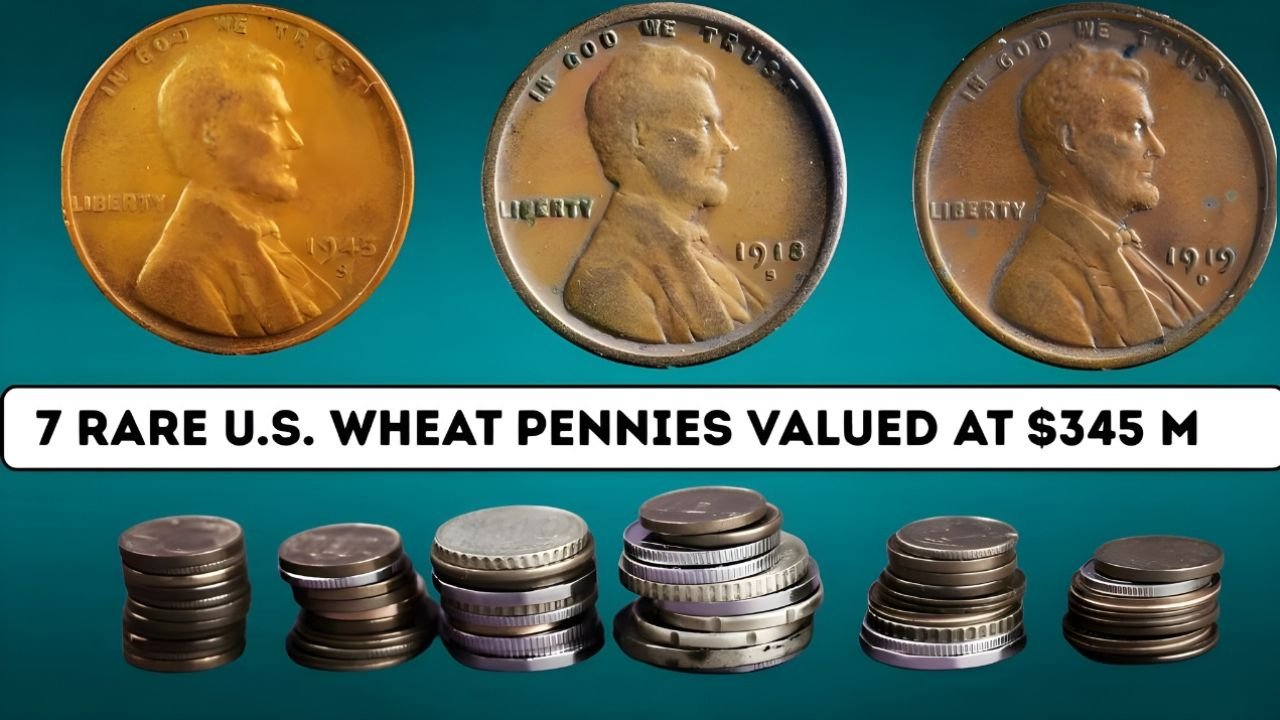
It’s hard to believe that a tiny one-cent coin—the kind most people overlook—could be worth thousands, hundreds of thousands, or even millions of dollars. Yet some Wheat Pennies from the early 1900s to mid-20th century are doing exactly that. Even wilder? A few of these ultra-rare pennies still pop up in circulation, old jars, estate boxes, and forgotten family collections.
Below are seven of the rarest and most valuable U.S. Wheat Pennies, with a combined potential value of $345 million if high-grade examples suddenly hit the market today.
Ready to check your change?
1. 1943 Copper Wheat Penny – Up to $1.7 Million

The king of all rare pennies.
In 1943, the U.S. Mint switched from copper to zinc-coated steel for WWII. But a few copper planchets were accidentally left in the presses, creating a handful of 1943 copper cents.
How to identify it
- Does NOT stick to a magnet
- Copper-brown, not silver-gray
- Weighs 3.11g (steel weighs 2.7g)
High-grade value: Around $1.7 million
Known examples: ~20
2. 1909-S VDB Lincoln Penny – Up to $50,000

The first Lincoln cent ever struck—and the rarest version of it.
The initials “VDB” (for designer Victor David Brenner) were quickly removed after complaints, leaving only 484,000 with the initials on the reverse.
Why it’s valuable
- First-year design
- Extremely low production
- High collector demand
High-grade value: Up to $50,000
Still found in: Old coin folders and inherited collections
3. 1914-D Wheat Penny – Up to $40,000

The Denver mint struck only 1.1 million of these pennies—very low for its time. Most heavily circulated, making sharp examples incredibly scarce.
What makes it special
- Early Denver mint rarity
- Strong demand among Lincoln series collectors
High-grade value: Up to $40,000
Low grades: Still worth $150–$300+
4. 1922 No D Wheat Penny – Up to $25,000
Every 1922 penny was struck in Denver… so why do some have no mint mark?
A heavily worn die caused the “D” to vanish completely.
What to look for
- Clean date with no mint mark
- Strong details on Lincoln’s portrait
High-grade value: Up to $25,000
Known examples: Few thousand
5. 1931-S Wheat Penny – Up to $2,000
With only 866,000 minted, the 1931-S is a low-mintage key date hiding in plain sight.
Why collectors love it
- Very low production
- Commonly saved but still scarce in Mint State
High-grade value: Around $2,000
Circulated value: $100–$300
6. 1955 Double Die Obverse – Up to $114,000
One of the most dramatic and famous error coins in history.
Massive doubling appears on:
- LIBERTY
- IN GOD WE TRUST
- 1955 date
Why it stands out
The doubling is so bold you can spot it with the naked eye.
High-grade value: $50,000–$114,000
Still found: Occasionally in circulation and old roll collections
7. 1944 Steel Wheat Penny – Up to $400,000
The reverse of the 1943 copper error.
In 1944, pennies returned to copper. But a few steel blanks from 1943 accidentally made it through the presses.
How to identify
- Silver-gray steel color
- Sticks to a magnet (opposite of the 1943 copper!)
High-grade value: Up to $400,000
Known examples: ~30
Estimated Combined High-Grade Value
| Coin | Year/Mint | High-Grade Value | Known Specimens | Notes |
|---|---|---|---|---|
| 1943 Copper | Philadelphia | $1.7M | ~20 | Accidental copper strike |
| 1909-S VDB | San Francisco | $50,000 | 484,000 | First-year issue |
| 1914-D | Denver | $40,000 | 1.1M | Scarce early mint |
| 1922 No D | Denver | $25,000 | Few thousand | Missing mint mark |
| 1931-S | San Francisco | $2,000 | 866,000 | Low mintage |
| 1955 Double Die | Philadelphia | $114,000 | Unknown | Major doubling error |
| 1944 Steel | Philadelphia | $400,000 | ~30 | Wrong-metal strike |
Total Potential Market Value: ≈ $345 million
Why These Pennies Still Turn Up
Many rare pennies survive because people:
- Saved them in jars
- Passed them down through families
- Packed them away in old coin albums
- Forgot them in drawers, safes, or basement boxes
Every year, collectors report surprise finds in garage sales, bank rolls, estate cleanouts, and pocket change.
FAQ: Rare Wheat Pennies
1. Are Wheat Pennies still circulating?
Yes—mostly from the 1940s and 1950s, but rare dates still surface occasionally.
2. How do I know if I found a valuable one?
Check the date, mint mark, and any odd details like doubling or missing marks.
3. Do I need special tools?
A simple magnifying glass, good lighting, and a magnet are enough.
4. Are all old pennies valuable?
No. Most Wheat Pennies are worth 2–10 cents unless they are key dates or errors.
5. Where can I sell rare pennies?
Trusted options include coin dealers, auctions, and certification services like PCGS or NGC.
Final Thoughts
Wheat Pennies are tiny pieces of American history—and for a few lucky people, they’re also life-changing discoveries. Before you cash in your next handful of change, look closely. That ordinary-looking penny could be worth thousands—or even millions.