
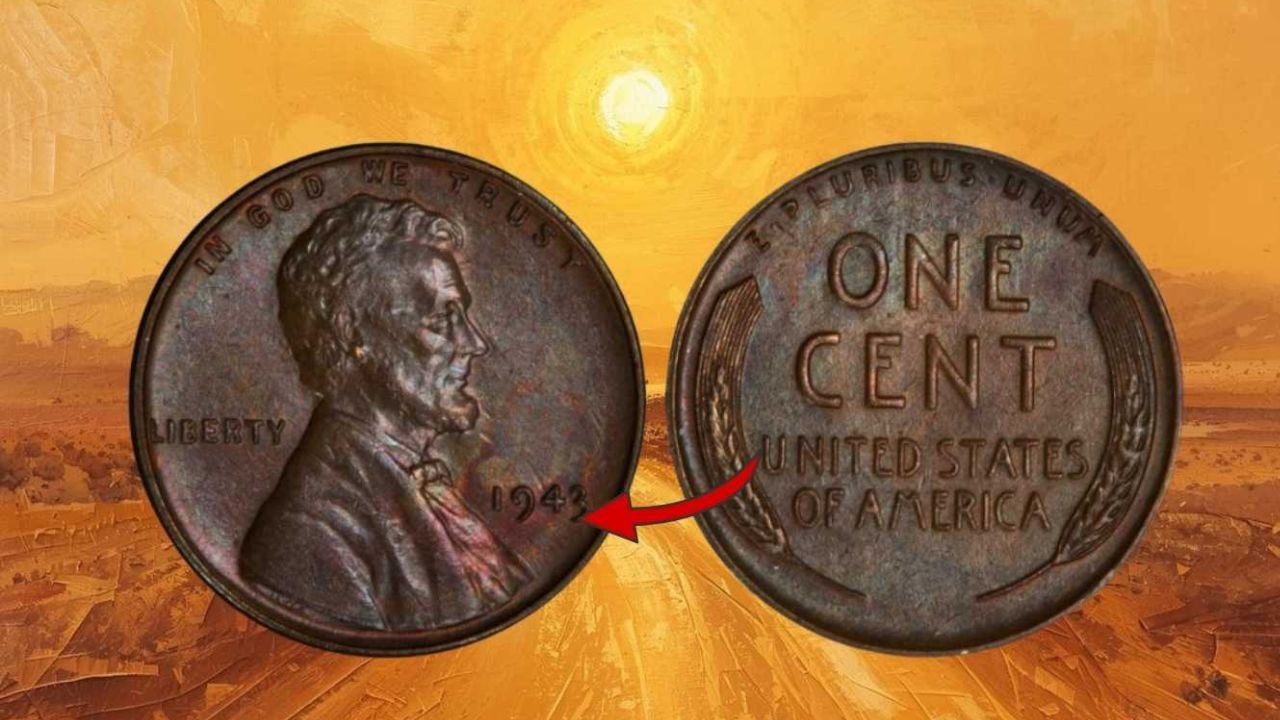
Imagine this: you’re relaxing in a barber’s chair, chatting about weekend plans, when something tiny and shiny on the countertop catches your eye. You pick it up casually…
glance at the date…
and your heart nearly stops.
Could this ordinary-looking coin really be worth millions?

That was the unbelievable claim circulating recently after a Lincoln Wheat Penny—allegedly valued at $10.10 million—was spotted sitting on a barber’s counter before being identified as an ultra-rare treasure. Whether myth, mystery, or miracle, the story reignited massive interest in rare pennies and reminded everyone of one powerful truth:
You never know what’s hiding in your pocket change.
Let’s break down why Wheat Pennies can reach seven-figure prices, what makes certain dates spectacularly rare, and how to check your loose change like a pro.
A Quick History of the Lincoln Wheat Penny

The first Lincoln Wheat Penny debuted in 1909, commemorating the 100th anniversary of Abraham Lincoln’s birth.
Key facts:
- Designed by Victor David Brenner
- First U.S. coin with a president’s portrait
- Produced from 1909 to 1958
- Reverse features two stalks of wheat (hence the nickname)
While billions were minted, only a tiny fraction contain:
- Mistakes
- Rare mint marks
- Incorrect metals
- Exceptional preservation

These are the coins that routinely bring five-, six-, and even seven-figure prices at auctions.
Why This Penny Was Reported at $10.10 Million
Whether this specific barber shop coin truly hit $10.10 million is up for debate—but the reason such a figure is even plausible lies in these three factors:
1. Extreme Rarity
Some Wheat Pennies exist in quantities of:
- 20
- 30
- or fewer
Rarer still are coins struck accidentally on the wrong metal (like the legendary 1943 copper or 1944 steel pennies).
2. Condition / Grade
A Wheat Penny graded MS-66+ or MS-67+ can skyrocket from:
- $25,000 → $250,000
- $100,000 → $1,000,000+
Collectors will spend fortunes for museum-quality examples.
3. Historical Significance
A flawless, extremely rare Wheat Penny isn’t just currency—it’s:
- American history
- A collectible icon
- A direct link to the Mint’s early 20th-century craftsmanship
Certain combinations of rarity + grade + historical relevance can push coins into multi-million-dollar territory.
The Barber Shop Story: A Coin Hidden in Plain Sight
Here’s the story as it spread:
A barber had an old jar filled with random coins he’d collected over decades. One penny, unusually shiny for its age, was sitting right on the counter. A customer noticed the date/mint mark combination, recognized it instantly, and advised the barber to get it examined.
After grading and professional evaluation, the coin was reportedly valued at $10.10 million due to:
- A near-perfect grade
- A rare strike variety
- Its exceptional preservation
Whether this number is real or viral exaggeration, the takeaway remains true:
Rare pennies still surface in ordinary places—shops, garages, old jars, and estate boxes.
How to Spot a Valuable Lincoln Wheat Penny
You don’t need fancy tools—just careful attention.
1. Start With the Date
Look for high-value years:
- 1909-S VDB
- 1914-D
- 1922 No D
- 1931-S
- 1943 Copper
- 1944 Steel
- 1955 Double Die
2. Check the Mint Mark
Below the date, look for:
- D = Denver
- S = San Francisco
- (no mark) = Philadelphia
Some combinations are extremely rare.
3. Look for Errors
These bring BIG money:
- Double dies
- Wrong metal
- Off-center strikes
- Missing mint marks
- Overdates
4. Evaluate Condition
Sharp details = higher value.
Worn coins bring much less.
Why Coin Collecting Is So Addictive
Collectors are drawn to Wheat Pennies because they offer:
- History
- Mystery
- The thrill of the hunt
Every coin tells a story. Some survived wars, the Great Depression, and circulation wear. Others sat untouched for decades, hiding their value until the right person picked them up.
Protecting Valuable Coins
If you find a potential treasure:
- Handle it by the edges
- Do not clean it
- Store it in a proper coin holder
- Get it graded by PCGS or NGC
- Consider insurance for high-value pieces
Cleaning or mishandling can destroy thousands of dollars in value.
5 Most Valuable Lincoln Wheat Pennies (Real Market Estimates)
| Year | Type | Key Feature | Approx. Value |
|---|---|---|---|
| 1943 | Copper | Wrong-metal strike | $1,000,000+ |
| 1909-S VDB | First Year | VDB initials | $100,000–$1,000,000+ |
| 1922 | No D | Missing mintmark | $50,000–$100,000+ |
| 1955 | Double Die | Famous doubling | $50,000–$1,000,000+ |
| 1944 | Steel | Ultra-rare | $400,000+ |
A $10.10 million valuation would require one of these coins in near-perfect condition or an ultra-rare newly discovered variety.
Final Thoughts
The Lincoln Wheat Penny isn’t just scrap change—it’s a symbol of American history, nostalgia, and surprising value. While the barber-shop $10.10 million penny is an extraordinary claim, the message is crystal clear:
Rare, life-changing pennies really do exist.
Before you toss that old change aside, pause.
Look.
Check the date.
Your next coin find could be worth far more than you ever imagined.