
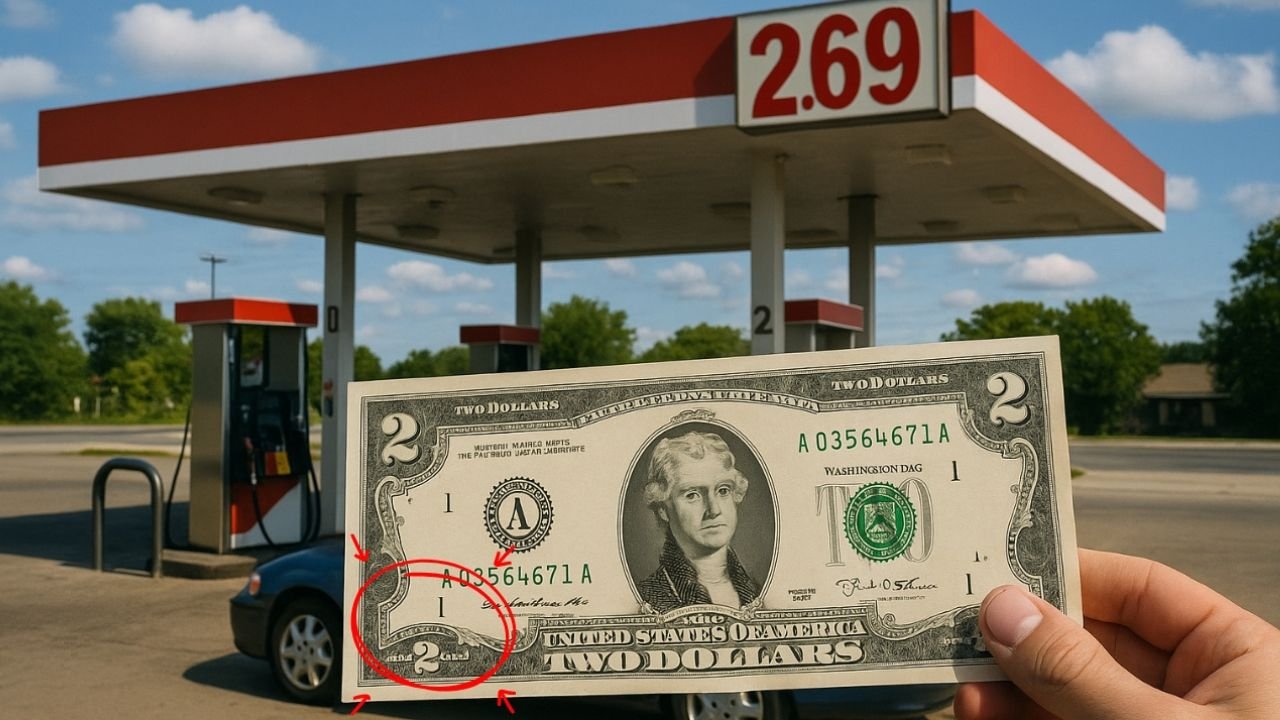
Imagine stopping by a gas station, grabbing a drink, getting your change, and later realizing one of those small bills is worth millions. It sounds impossible, but that is exactly what happened when a seemingly ordinary $2 bill turned out to be valued at an astonishing $2.7 million.
It looked like any other faded, slightly worn piece of U.S. currency. But beneath its humble appearance was a rare historical note that stunned collectors and experts. Here’s the full story of how it was found and why it became one of the most valuable $2 bills ever recorded.
The Unexpected Discovery at the Pump

The discovery began at a small-town gas station. A customer paid with a mix of bills, including a $2 note that immediately caught the clerk’s attention.
It wasn’t the modern style.
It had a red seal instead of a green one.
The serial number looked unusual.
And the texture felt different from today’s notes.
The clerk, curious because he casually collected older coins and bills, set it aside. Later that night, he did a bit of research online. Within minutes, he realized the note might be something far more valuable than two dollars.

After contacting an appraiser and sending the note for expert grading, the truth came out: the bill was an ultra-rare Treasury Note from the late 1800s, in remarkably high-grade condition. It was the kind of note collectors dream of but almost never see outside of museums.
What Made This $2 Bill Worth $2.7 Million?
Here are the attributes that made collectors compete fiercely for it:
| Feature | Description | Why It Is Valuable |
|---|---|---|
| Series Year | 1890s Treasury Note | Extremely scarce; very few survive |
| Seal Color | Red | Early U.S. notes before modern ink standards |
| Condition | Near-Mint (graded 68) | Almost flawless despite age |
| Printing Error | Slight offset alignment | Collectors pay premiums for rare errors |
| Serial Number | Low-number, early print | Highly desirable and sought after |
This note had every factor collectors prize: rarity, an early series, exceptional condition, and a printing anomaly. It was not just old. It was unique.
The History of the $2 Bill

The United States first issued $2 notes in 1862. Over the decades, the design changed dramatically. Some versions featured red seals, blue seals, or older large-size designs much bigger than today’s bills.
Because the denomination was unpopular, most older $2 bills were destroyed or stored away. Very few survived. That is why any pre-1920s $2 note can be valuable, but ones in top condition with unusual features can be worth incredible amounts.
The Auction That Shocked the Collecting World
After authentication and grading, the bill went to a private auction. Bidding quickly escalated as collectors recognized its rarity.
The final price: $2.7 million.
The identity of the buyer was not revealed, but experts believe the note could sell for even more in the future as rare U.S. currency continues to rise in value.
The Lesson: History Sometimes Hides in Plain Sight
What makes this story remarkable is not just the dollar amount. It is the fact that this extraordinary piece of American history was sitting in a gas station cash drawer.
It could have been spent.
It could have been deposited.
It could have disappeared forever.
Instead, one curious clerk noticed something unusual. A few small details turned a routine moment into a life-changing discovery.
How to Spot Rare or Valuable Currency
If this story inspires you to check your own bills, here is what to look for:
1. Series Year
Notes from the 1800s or early 1900s are often rare and collectible.
2. Seal Color
Red or blue seals usually indicate older, more valuable issues.
3. Serial Number
Collectors love unusual serial numbers, such as:
- Low numbers
- Repeating digits
- Solid numbers
- Ladder numbers
4. Condition
Crisp, uncirculated notes can be worth dramatically more.
5. Printing Errors
Offset prints, missing seals, ink smudges, or alignment mistakes can multiply value.
6. Professional Grading
Services like PMG or PCGS Currency can authenticate and grade notes, protecting you from counterfeits and increasing value.
Frequently Asked Questions
Is the $2 bill still printed?
Yes. The U.S. still prints $2 bills, though they are released in smaller quantities.
Can a $2 bill really be worth millions?
Extremely rare early notes, especially in high grade or with special features, can reach six or seven figures.
How can I tell if my $2 bill is valuable?
Check the year, seal color, serial number, condition, and any printing errors.
Are $2 bills rare today?
Modern ones are not rare, but older red-seal or blue-seal notes can be quite collectible.
What is the safest way to store valuable currency?
Use Mylar currency sleeves, keep them dry, and avoid folding or handling the bill.
Final Thought
The $2.7 million gas station bill is a powerful reminder that incredible treasures sometimes hide in everyday places.
A worn note in a drawer.
A bill handed to a cashier.
A piece of currency nearly spent and forgotten.
The next time you receive change, look twice. A small discovery could one day become a big story — or an extraordinary fortune.