
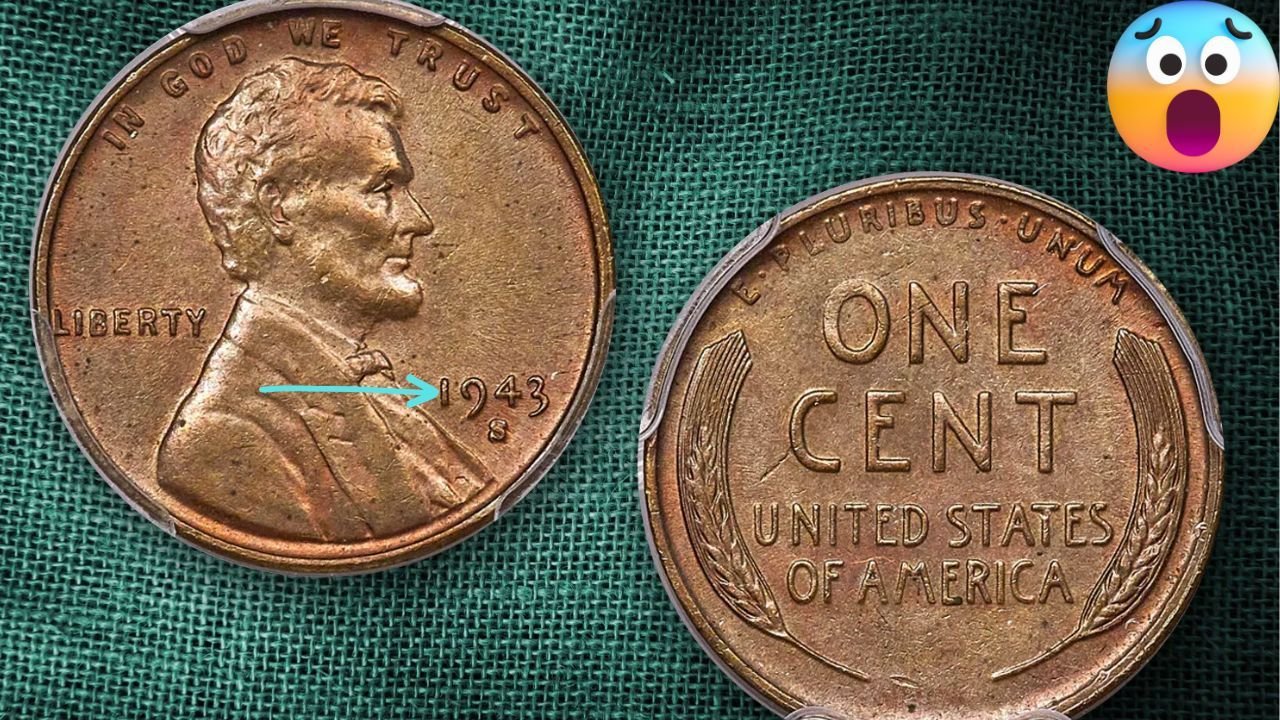
Most of us have a jar or drawer full of old coins collecting dust. But what if one of those forgotten pennies was worth more than a luxury home? It sounds unbelievable, yet the legendary 1943 Bronze Lincoln Wheat Penny has turned everyday pocket change into million-dollar treasure for a few lucky people. Here’s the real story behind this rare coin and how you can spot valuable Wheat Pennies hiding in your own collection.
The Iconic Lincoln Wheat Penny
First minted in 1909 to honor Abraham Lincoln’s 100th birthday, the Wheat Penny became the first U.S. coin to feature an actual historical figure. The design included:
- Lincoln’s portrait on the front
- Two wheat stalks on the back
- A classic bronze finish

These coins circulated until 1958 and are still common in old jars, boxes, and family collections.
Why Some Wheat Pennies Are Worth a Fortune
Not all Wheat Pennies are valuable — millions were produced. The coins that bring big money fall into three categories:
1. Rare Minting Errors
Coins accidentally struck with wrong dies, metals, or doubled lettering.
2. Limited Mintages

Some years and mints produced only small batches.
3. Historical Oddities
Coins created during wartime metal shortages or transitional periods.
And then there’s the superstar of the coin world…
The $2.2 Million 1943 Bronze Penny
How It Happened

During World War II, the U.S. Mint switched from bronze to steel pennies to save copper for ammunition. But a few leftover bronze blanks from 1942 accidentally went through the presses — creating the ultra-rare 1943 Bronze Wheat Penny.
Why It’s So Valuable
- Only a handful exist
- It was never meant to be minted
- Collectors consider it the “holy grail” of U.S. coins
One sold for $1.7 million in 2010 — and another reached an incredible $2.2 million shortly afterward.
Other Valuable Wheat Pennies to Look For
| Year & Type | Material | Estimated High Value | Notes |
|---|---|---|---|
| 1909-S VDB | Bronze | $1,500–$3,000 | First Lincoln cent; controversial initials |
| 1914-D | Bronze | $2,000–$5,000 | Very low mintage |
| 1922 “No D” | Bronze | $500–$2,000 | Missing mintmark error |
| 1943 Bronze | Bronze | $1.2M–$2.2M+ | Rare wartime mistake |
| 1955 Double Die | Bronze | $1,000–$15,000 | Famous doubled lettering |
Even common Wheat Pennies from the 1920s and 1930s can be worth a few dollars to a few hundred depending on condition.
How to Check Your Pennies for Value
1. Look for Wheat Ears
Any penny with wheat stalks on the back is a Wheat Penny (1909–1958).
2. Check the Year & Mintmark
- D = Denver
- S = San Francisco
- No letter = Philadelphia
Some combinations are extremely valuable.
3. Spot Metal or Printing Errors
- Doubling in the date or letters
- Missing mintmarks
- Odd color or shine
4. Test Your 1943 Penny
- Use a magnet
- Steel pennies stick
- Bronze pennies do NOT stick — these could be extremely valuable
5. When in Doubt, Get It Appraised
Professional grading services can confirm authenticity and value.
Why People Love Collecting Wheat Pennies
Beyond the thrill of striking it rich, these coins are miniature pieces of American history. They passed through the hands of soldiers, factory workers, and families during major moments — from the Great Depression to World War II. Finding one feels like uncovering a tiny time capsule.
FAQs
1. How do I know if my 1943 penny is bronze?
Test it with a magnet. If it doesn’t stick, you may have something rare.
2. Are all old pennies valuable?
No — most are worth only a cent, but some rare dates and errors can be worth thousands.
3. Where can I sell a rare penny?
Coin shops, auctions, and certified grading companies are your safest options.
4. Should I clean old coins?
Never. Cleaning can destroy value instantly.
5. What’s the best way to start collecting?
Begin with Wheat Pennies, sort by year and mintmark, and learn common errors.
Conclusion: Your Next Big Find Could Be in Your Pocket
Before tossing loose change aside, take a closer look. A rare Wheat Penny — even a million-dollar one — could be hiding in your coin jar right now. And whether you find a valuable treasure or simply enjoy the hunt, you’ll be exploring a fascinating piece of American history.