
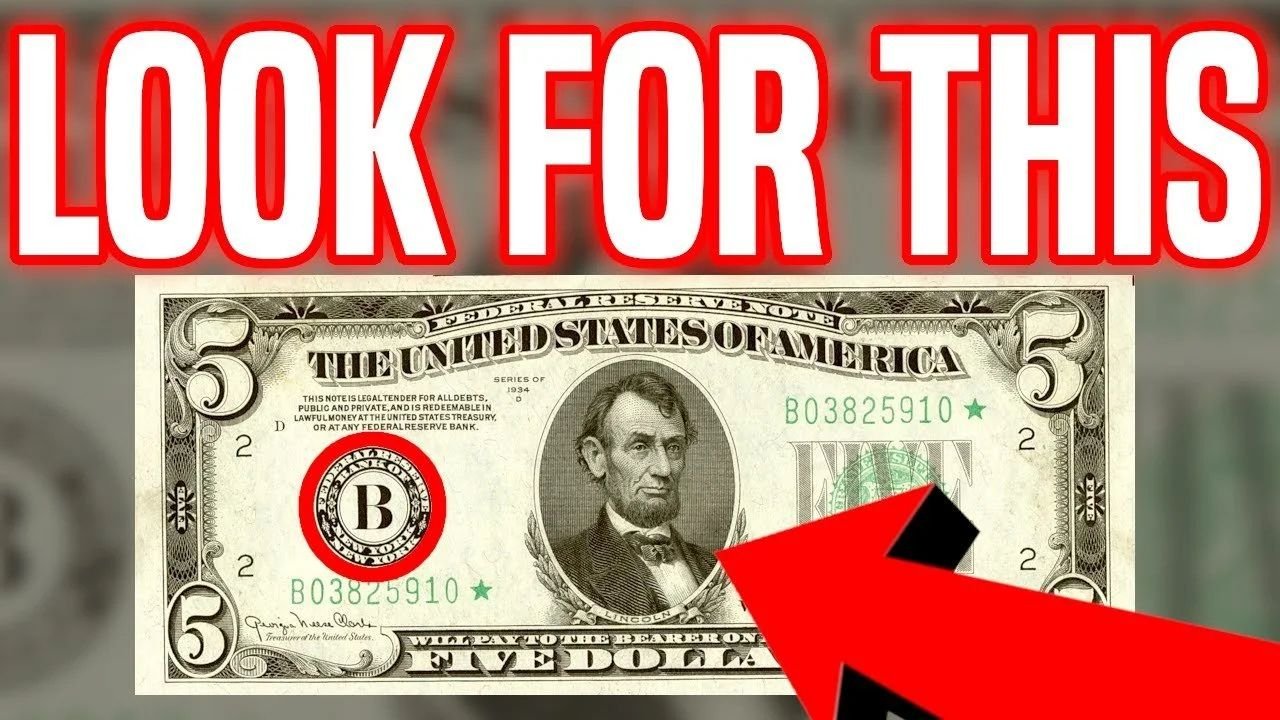
What if one of the most valuable collectibles wasn’t buried in a collection or locked in a vault — but sitting quietly in your wallet? That’s exactly the case with the 1995 $5 bill featuring an upside-down Treasury seal, a rare printing error that can turn an ordinary five-dollar note into a bill worth hundreds or even thousands of dollars.
If you’ve been wondering whether hidden treasures still show up in everyday circulation, this fascinating error note proves they absolutely do. Here’s how to spot one and what makes it such a hot item among collectors.
Why the 1995 $5 Bill Is So Special

The 1995 series of $5 bills was part of the older currency design, showing:
- President Abraham Lincoln on the front
- The Lincoln Memorial on the back
Millions of these bills were printed — but only a tiny number left the Bureau of Engraving and Printing with a major, extremely rare flaw: the green Treasury seal and serial numbers were printed upside-down.
This printing mistake instantly transformed a common $5 bill into a highly desirable error note valued by collectors around the world.
Understanding the Error: The Upside-Down Seal

The Treasury seal and serial numbers are printed in a separate stage from the rest of the bill. That means if the sheet is accidentally flipped before this step, the seal ends up 180 degrees out of alignment.
Normally, misprinted sheets are destroyed before they ever reach the public. The fact that a few escaped makes this error note incredibly rare — and highly valuable.
How to Identify a 1995 $5 Bill With an Upside-Down Seal
If you want to check your bills at home, here are the key features to look for:
1. Confirm the Series Year

Look for “Series 1995” printed near Lincoln’s left shoulder.
2. Inspect the Treasury Seal
The green seal to the right of Lincoln’s portrait should appear upside-down compared to the rest of the note.
3. Check the Serial Numbers
In some error notes, the serial numbers may also be inverted or misaligned.
4. Evaluate the Condition
Crisp, uncirculated, or lightly circulated bills carry higher value. Heavy folds or dirt lower the price.
5. Handle With Care
Even a small crease can reduce the note’s value significantly, so avoid bending or pressing it.
How Much Is a 1995 Upside-Down Seal $5 Bill Worth?
Values vary based on rarity and condition, but typical price ranges include:
- Circulated notes: $500–$1,000
- Uncirculated or graded notes: $1,500–$3,000+
Collectors pay extra for bills authenticated by major grading services like PMG or PCGS Currency.
Authenticating Your Bill
Because some online sellers try to fake error notes, proper verification is essential. Here’s how to authenticate a real one:
- Submit it to PMG (Paper Money Guaranty) or PCGS Currency
- Avoid cleaning or flattening the bill
- Compare with verified examples from trusted numismatic sources
- Store it in a currency sleeve to prevent damage
A professional grade increases both value and buyer confidence.
Where to Sell a Rare Error $5 Bill
If your bill is real, you can sell it through:
- Reputable coin and currency dealers
- Major auction houses (Heritage Auctions, Stack’s Bowers)
- Collector marketplaces and online platforms
- Local coin shows or currency expos
Always get a professional appraisal before selling.
FAQs – 1995 $5 Bill With an Upside-Down Seal
1. What caused the upside-down seal error?
A printing sheet was flipped before the final printing of the Treasury seal and serial numbers.
2. Are these bills extremely rare?
Yes. Very few misprinted notes escaped destruction.
3. How much can one be worth?
Between $500 and $3,000+, depending on condition and demand.
4. How can I confirm authenticity?
Have the bill graded by PMG or PCGS Currency.
5. Should I clean or flatten my bill?
No. Cleaning or pressing will reduce its collector value.
Conclusion: Check Every $5 — A Small Mistake Could Mean Big Money
The 1995 upside-down seal $5 bill is a powerful reminder that even small everyday objects can hold surprising value. A simple printing error turned a common bill into a collectible worth thousands — and one could still be out there, hiding in circulation.
So before you spend that old five-dollar note, take a few seconds to inspect it. You might be holding a rare piece of printing history worth far more than its face value.