
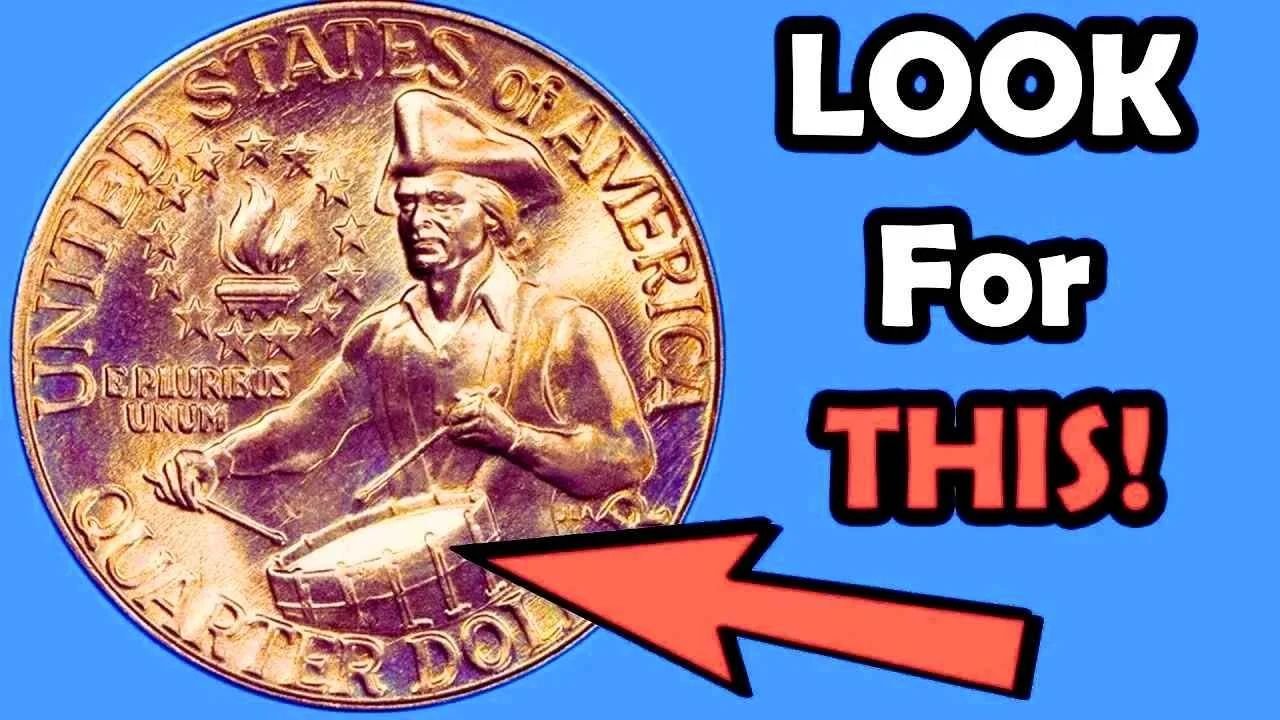
The 1976 Bicentennial Quarter has recently become one of the most viral and talked-about coins in America. Collectors everywhere are digging through old jars, wallets, and dresser drawers — and for good reason. A rare version of this special coin is rumored to be worth as much as $1 million today. While most Bicentennial Quarters are common pocket change, one extraordinary variety has turned this historic coin into a modern treasure hunt.
The Story Behind the 1976 Bicentennial Quarter
To celebrate the United States’ 200th anniversary of independence, the U.S. Mint released a commemorative quarter in 1975 and 1976. These coins feature:
- The dates 1776–1976
- A patriotic reverse design showing a colonial drummer, a torch, and 13 stars
- George Washington’s portrait on the obverse

Millions were produced for everyday circulation, so most are still worth just 25 cents. However, a handful of special varieties — especially those with minting errors or silver composition — have become extremely valuable.
Why Some 1976 Quarters Are Worth a Fortune
Most Bicentennial Quarters are made of copper-nickel, but several high-value factors can increase the price dramatically:
1. 40% Silver Strikes
The U.S. Mint created limited 40% silver Bicentennial Quarters for collector sets. These are worth far more than face value — and rare perfect-grade examples can sell for thousands.
2. Minting Errors

Some coins have rare mistakes such as:
- Double strikes
- Misaligned dies
- Missing details
- Strikes on the wrong metal planchet
These errors can push values into the thousands — or even beyond.
3. Untouched, High-Grade Condition
A flawless, perfect-condition Bicentennial Quarter is extremely rare. Experts believe that one ultra-high-grade, error-strike silver Bicentennial Quarter could fetch close to $1 million if discovered.
Quick Coin Facts
| Specification | Detail |
|---|---|
| Name | Bicentennial Quarter |
| Years Minted | 1975–1976 |
| Face Value | 25 cents |
| Metal | Copper-nickel (common) / 40% silver (rare) |
| Obverse | George Washington |
| Reverse | Colonial drummer + torch + 13 stars |
Yes — Some Rare Quarters Are STILL in Circulation

Even though these coins were minted decades ago, many are still floating around today. People often kept them as souvenirs in the 70s and later spent them without realizing their future value. That means a rare version could still be:
- In pocket change
- In a jar of old coins
- Inside inherited coin collections
- Sitting unnoticed in a drawer
Collectors say that several valuable error coins have been discovered completely by accident — simply because someone decided to take a closer look.
How to Check If You Have a Valuable 1976 Quarter
Here’s what to look for:
1. Check the Mint Mark
- “S” mint mark = San Francisco (possible silver version)
- No mint mark or “D” = circulation strikes
2. Look for Silver
Silver Bicentennial Quarters have a slightly different edge color and weight.
3. Hunt for Errors
Examine the coin for unusual features like:
- Double lettering
- Missing details
- Off-center designs
- Strange color or weight
4. Examine Condition
The sharper and cleaner the coin looks, the more valuable it may be.
5. Get a Professional Evaluation
A certified expert (PCGS, NGC, or a trusted coin dealer) can determine:
- Authenticity
- Condition
- Market value
A Small Coin with a Big Story
The 1976 Bicentennial Quarter represents a unique moment in American history. While most are worth only pocket change, the possibility that a rare $1 million version still exists has sparked a nationwide treasure hunt. It’s a reminder that sometimes the most ordinary-looking coins can hold extraordinary value.
So the next time you get change at the store, take a moment to check — you might be holding a hidden fortune without even knowing it.
FAQs
1. Are 1976 Bicentennial Quarters rare?
Most are common, but silver versions and error coins can be very rare and valuable.
2. Can a Bicentennial Quarter really be worth $1 million?
Only an extremely rare, error-strike, perfect-grade example might reach that level — but experts believe at least one exists.
3. How do I know if my quarter is silver?
Look for the “S” mint mark and check for a silver-colored edge instead of copper.
4. Where can I sell a rare quarter?
Auction houses, PCGS/NGC-certified dealers, or reputable coin shops.
5. Should I clean my 1976 quarter?
No — cleaning damages coins and lowers value.