
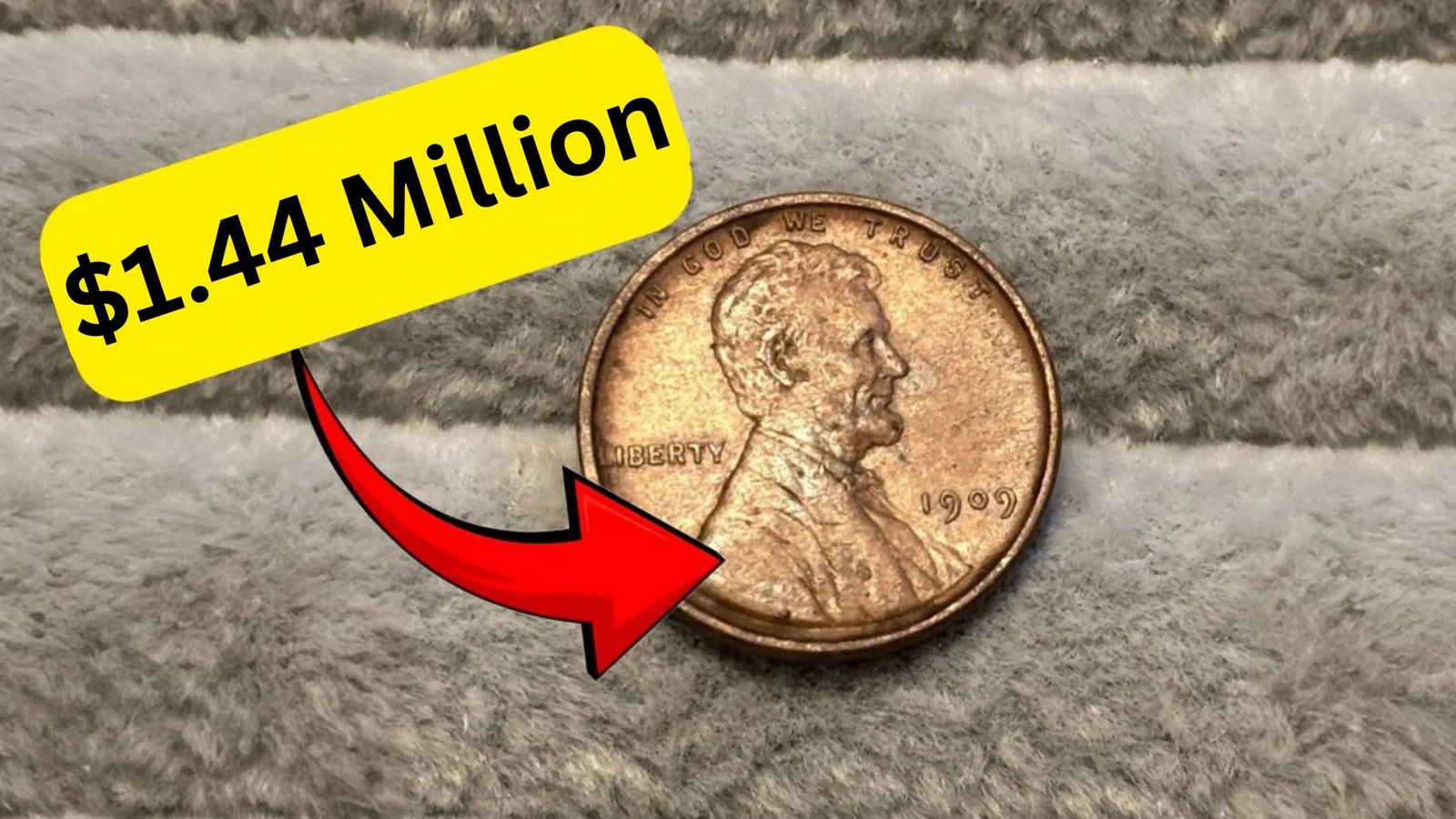
Could a penny sitting in your change jar be worth over a million dollars? It sounds unreal, but one extremely rare Lincoln Wheat Penny sold for $1.44 million at auction — and similar coins may still be floating around in ordinary pocket change.
If you want to know what makes these pennies so valuable and how to spot one, this simple guide breaks it all down.
What Exactly Is a Lincoln Wheat Penny?

The Lincoln Wheat Penny (1909–1958) was the first U.S. coin to feature a real person: Abraham Lincoln. These cents show Lincoln on the front and two wheat stalks on the back.
Most Wheat Pennies are common and worth just a few cents — but a handful of rare mint errors turn ordinary copper into life-changing money.
Quick History Highlights
- Minted: 1909–1958
- Designer: Victor David Brenner
- Metal: 95% copper
- Replaced by: The Lincoln Memorial cent in 1959
Why One Lincoln Wheat Penny Sold for $1.44 Million
In 2023, a 1943 bronze Wheat Penny sold for $1.44 million. During World War II, the U.S. Mint switched from copper to zinc-coated steel to save copper for military supplies. But a few leftover bronze blanks accidentally got stamped in 1943 — creating one of the rarest U.S. coins ever made.
Key Features of the Million-Dollar Penny
| Feature | Details |
|---|---|
| Year | 1943 |
| Metal | Bronze, not steel |
| Weight | 3.11g (steel weighs 2.7g) |
| Magnet Test | Does not stick |
| Condition | PCGS MS-63 |
| Rarity | Fewer than 20 known |

Quick Tip:
If you have a 1943 penny, start with a magnet.
- Sticks? It’s steel (worth 10–50 cents).
- Doesn’t stick? You may have something extremely valuable.
5 Most Valuable Lincoln Wheat Pennies (2024)
| Rank | Year & Mint | Rarity / Error | Record Price |
|---|---|---|---|
| 1 | 1943 Bronze (P) | Accidental bronze strike | $1.44M |
| 2 | 1944 Steel (P) | Struck on leftover steel | $373,000 |
| 3 | 1909-S VDB | Low mintage + initials | $168,000 |
| 4 | 1955 Double Die | Doubled lettering | $124,000 |
| 5 | 1922 No D | Missing mint mark | $108,000 |
How to Check Your Pennies at Home
You don’t need fancy equipment — just a magnet, good lighting, and a magnifying glass.
Step 1: Sort by Year
Focus on 1909–1945 penny dates first.
Step 2: Look for Big Red Flags
- 1943 bronze: Copper color, not magnetic
- 1944 steel: Silver color, is magnetic
- 1955 double die: Blurry, doubled “LIBERTY” and date
Step 3: Check the Mint Mark
- S = San Francisco (often rare)
- D = Denver
- No mark = Philadelphia
Step 4: Estimate Condition
| Grade | Meaning | Value Boost |
|---|---|---|
| Good | Worn | 1x |
| Fine | Visible details | 3x |
| Extra Fine | Sharp lines | 10x |
| Uncirculated | Looks new | 50x+ |
Real Examples of Million-Dollar Discoveries
- A California teen found a 1943 bronze penny in an inherited coin roll — it later sold for over $200,000.
- A Michigan man received a 1955 doubled-die penny in his change — worth more than $1,800.

These finds prove rare coins can still appear in circulation.
Where to Sell a Rare Lincoln Wheat Penny
If you think you found something valuable:
Step 1: Get it authenticated
- PCGS or NGC (cost: $20–$50)
Step 2: Choose a selling option
- Major auctions: Heritage Auctions, Stack’s Bowers
- Local coin shops (avoid pawn shops — they pay very low)
Important Warning:
Never clean your coin. Polishing cuts value by up to 90%.
FAQs
1. Are all 1943 pennies valuable?
No. Only bronze 1943 pennies. Steel ones are common.
2. Can rare pennies still be found today?
Yes — Wheat Pennies still pop up in bank rolls and pocket change.
3. What’s the easiest valuable penny to recognize?
The 1955 Double Die — the letters look doubled without magnification.
4. How do I know if my penny is bronze or steel?
Use a magnet: steel sticks, bronze does not.
5. Should I clean an old coin before selling it?
Never. Cleaning destroys collector value.
Final Thoughts: Start Checking Your Change Today
A $1.44 million penny may sound like a myth, but it’s real — and it slipped through the Mint just like any ordinary coin. With a simple magnet and a few minutes of searching, you could uncover a rare Wheat Penny worth hundreds, thousands, or even millions.
So grab your change jar or bank coin roll and start hunting — your next penny might be a fortune waiting to be found.