
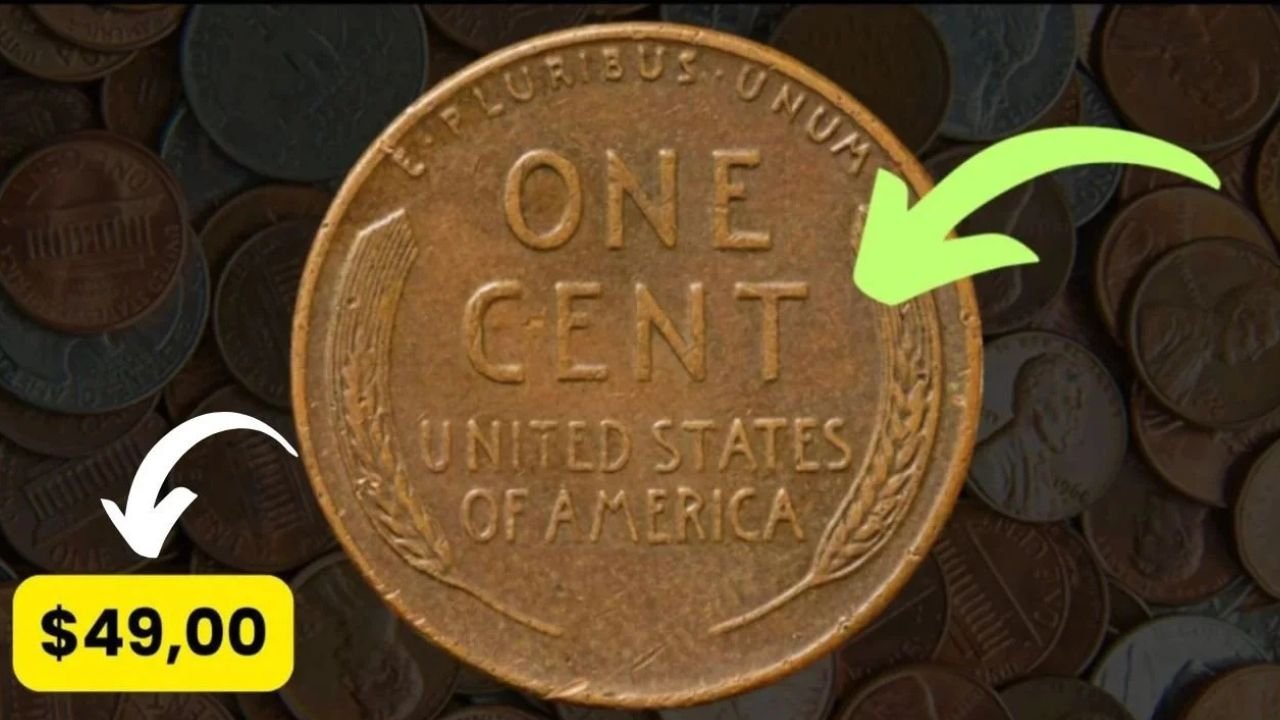
The Lincoln Wheat Penny remains one of America’s most beloved and collectible coins. First minted in 1909 to honor President Abraham Lincoln, these coins circulated for decades and now carry a rich history. While most Wheat Pennies are common and worth only a few cents, certain rare varieties have surged in value — with one particular example in 2025 selling for up to $49,000.
Even more surprising? Some of these valuable pennies might still be found in everyday change.
Why Some Wheat Pennies Are Worth Up to $49,000

Several key factors determine whether a Lincoln Wheat Penny jumps from pocket change to a high-value collectible.
1. Year and Mint Mark
Some years are exceptionally rare and command strong prices, especially:
- 1909-S VDB — first-year rarity, extremely limited
- 1914-D — low Denver mintage
- 1931-S — scarce during the Great Depression
The mint mark is located beneath the date:
- S = San Francisco
- D = Denver
- No mint mark = Philadelphia

These small letters can make a huge difference in value.
2. Condition
Coins that survived in high-grade or uncirculated condition bring much higher prices. Sharp details, original luster, and minimal wear can push a Wheat Penny into the thousands — and in exceptional cases, tens of thousands.
3. Mint Errors
Collectors love dramatic errors, such as:
- Doubled dies
- Off-center strikes
- Wrong planchet errors
- Misaligned or missing elements

These unique mistakes often increase value dramatically.
Key Wheat Pennies to Watch For
These dates are at the top of collectors’ lists in 2025:
1909-S VDB
- One of the most famous U.S. coins
- Top-grade examples can exceed six figures
1914-D
- Low mintage
- High-quality specimens often bring thousands
1931-S
- Scarce Depression-era coin
- Heavy demand among collectors
Error Pennies
Any Wheat Penny showing unusual doubling, misprints, or off-center strikes should be inspected closely — some have sold for $10,000–$49,000 depending on rarity and condition.
How to Check Your Wheat Pennies for Value
You don’t need expensive tools — just patience and good lighting.
1. Examine the Date and Mint Mark
Start by sorting by year. Early dates (1909–1930) tend to be more valuable.
2. Inspect the Coin’s Condition
Look for:
- Sharp details in Lincoln’s beard and coat
- Strong lettering
- Clean surfaces
- Original color and luster
Never clean a coin — cleaning reduces the value dramatically.
3. Look for Possible Mint Errors
Check for:
- Doubled numbers or letters
- Off-center shapes
- Unusual textures
- Missing or misplaced mint marks
When in doubt, set it aside.
4. Consider Professional Grading
If you suspect your coin is valuable, services like PCGS or NGC can officially authenticate and grade it. A certified grade can increase value and make selling much easier.
Are These Valuable Pennies Still in Circulation?
Surprisingly — yes. While most rare Wheat Pennies are held by collectors, many still appear in:
- Old jars and coffee cans
- Inherited coin boxes
- Estate sales
- Pocket change
- Bank coin rolls
People continue to discover valuable pennies every year, especially in older homes or inherited collections.
FAQs: The $49,000 Lincoln Wheat Penny
1. Can a Lincoln Wheat Penny really be worth $49,000?
Yes — rare dates, high-grade examples, and mint errors have reached this value at auctions.
2. Which Wheat Pennies are the most valuable?
Top examples include the 1909-S VDB, 1914-D, 1931-S, and error coins like doubled dies.
3. How can I tell if my penny is valuable?
Check the date, mint mark, and condition. Error features or uncirculated quality can significantly raise value.
4. Are rare Wheat Pennies still found in circulation?
Yes. Although uncommon, they still appear in spare change, coin rolls, and old jars.
5. How do I authenticate a Wheat Penny?
Use a professional grading service such as PCGS or NGC for accurate authentication and value assessment.
Final Thoughts
The Lincoln Wheat Penny is more than just a historic coin — it’s a potential treasure. With some varieties hitting values as high as $49,000, checking your change, jars, and inherited collections is well worth the effort. You never know when a simple penny could turn into an incredible discovery.